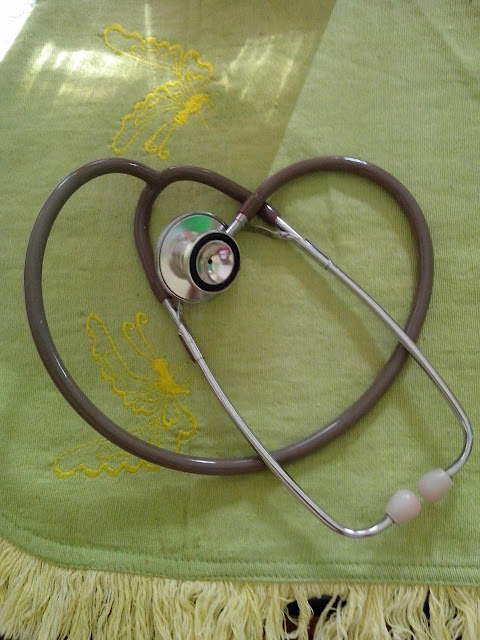
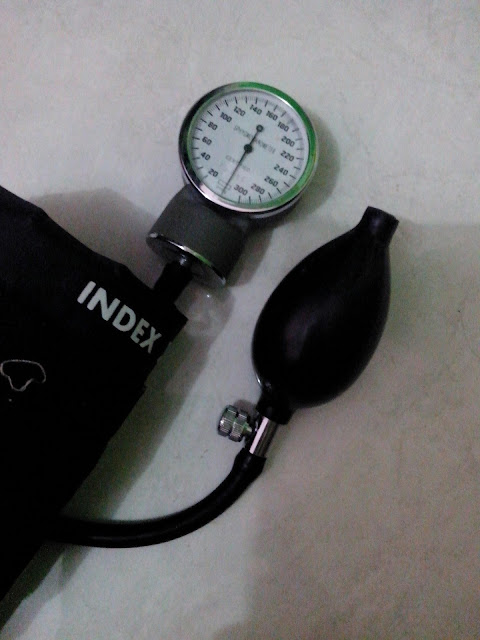
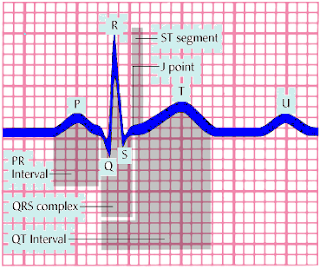
A stethoscope is a medical device for listening to sounds inside the body. The initial stethoscope was invented in the early 19th century by French physician Ren� Laennec, but was actually trying to achieve a rather different end: doctor-patient distance....
Sunday, June 1, 2014
Nursing Diagnoses : Activity Intolerance
Definition: Insufficient physiological or psychological energy to endure or complete required or desired daily activities
Related Factors
Generalized weakness
Sedentary lifestyle
Bedrest or immobility
Imbalance between oxygen supply and demand
[Cognitive deficits/emotional status; secondary to underlying disease process/depression]
[Pain, vertigo, extreme stress]
Characteristics
SUBJECTIVE
Report of fatigue or weakness
Exertional discomfort or dyspnea
[Verbalizes no desire and/or lack of interest in activity]
OBJECTIVE
Abnormal heart rate or blood pressure response to activity
Electrocardiographic changes reflecting dysrhythmias or ischemia [pallor, cyanosis]
Functional Level Classification:
Level I: Walk, regular pace, on level indefinitely; one flight or more but more short of breath than normally
Level II: Walk one city block [or] 500 ft on level; climb one flight slowly without stopping
Level III: Walk no more than 50 ft on level without stopping; unable to climb one flight of stairs without stopping
Level IV: Dyspnea and fatigue at rest
source : Nurse’s Pocket Guide : Diagnoses, Prioritized Interventions, and Rationales
download : link
Read More
Related Factors
Generalized weakness
Sedentary lifestyle
Bedrest or immobility
Imbalance between oxygen supply and demand
[Cognitive deficits/emotional status; secondary to underlying disease process/depression]
[Pain, vertigo, extreme stress]
Characteristics
SUBJECTIVE
Report of fatigue or weakness
Exertional discomfort or dyspnea
[Verbalizes no desire and/or lack of interest in activity]
OBJECTIVE
Abnormal heart rate or blood pressure response to activity
Electrocardiographic changes reflecting dysrhythmias or ischemia [pallor, cyanosis]
Functional Level Classification:
Level I: Walk, regular pace, on level indefinitely; one flight or more but more short of breath than normally
Level II: Walk one city block [or] 500 ft on level; climb one flight slowly without stopping
Level III: Walk no more than 50 ft on level without stopping; unable to climb one flight of stairs without stopping
Level IV: Dyspnea and fatigue at rest
source : Nurse’s Pocket Guide : Diagnoses, Prioritized Interventions, and Rationales
download : link
Saturday, May 31, 2014
LAWTON SCALE FOR INSTRUMENTAL ACTIVITIES OF DAILY LIVING
The Lawton scale evaluates more sophisticated functions than the
Katz index. Patients or caregivers can complete the form in a few minutes. The
first answer in each case—except for 8a—indicates independence, the second
indicates capability with assistance, and the third indicates dependence. In
this version, the maximum score is 29, although scores have meaning only for an
individual patient, as when declining scores over time reveal deterioration.
Questions 4 to 7 tend to be gender-specific; modify them as necessary.
| ||||||||||||||||||||||||||||||||||||||||||||||||||||||||||||||||||||||||||||||||||||||||||||||||||||||||||||||
Wednesday, May 21, 2014
Tools for Assessment of Geriatric Care
Numerous tools are available to help you perform a methodical functional
assessment. Some widely used methods are discussed here.
Read More
A functional assessment is used to evaluate the
older adult's overall well-being and self-care abilities. It will help
you identify individual needs and care deficits, provide a basis for developing
a plan of care that enhances the abilities of the older adult with coexisting
disease and chronic illness, and provide feedback about treatment and
rehabilitation. You can use the information to identify and match the older
adult's needs with such services as housekeeping, home health care, and day care
to help the patient maintain independence.
Katz index
The Katz Index of Activities of Daily Living is a widely used tool
for evaluating a person's ability to perform six daily personal care activities:
bathing, dressing, toileting, transfer, continence, and feeding. It describes
his functional level at a specific point in time and objectively scores his
performance. (See Katz Index of Activities of
Daily Living, pages 804 and 805.)
Lawton scale
Another widely used tool, the Lawton Scale for Instrumental
Activities of Daily Living, evaluates the ability to perform more complex
personal care activities. It addresses the activities needed to support
independent living, such as the ability to use the telephone, cook, shop, do
laundry, manage finances, take medications, and prepare meals. The activities
are rated on a three-point scale, ranging from independence to needing some help
to complete disability. (See Lawton Scale for
Instrumental Activities of Daily Living, page 806.)
Barthel index and scale
The Barthel Index evaluates the following 10 self-care functions:
feeding, moving from wheelchair to bed and returning, performing personal
toilet, getting on and off the toilet, bathing, walking on a level surface or
propelling a wheelchair, going up and down stairs, dressing and undressing,
maintaining bowel continence, and controlling the bladder. Each item is scored
according to the degree of assistance needed; over time, results reveal
improvement or decline.
A similar scale—called the Barthel Self-Care Rating Scale—is a
more detailed scale to evaluate function. Both tools provide information to help
you determine the type of assistance needed.
OARS Social Resource Scale
The Older Americans Research and Service Center (OARS) Social
Resource Scale is an assessment tool developed at Duke University in 1978. A
multidimensional tool, it evaluates level of function in the following five
areas:
-
social resources
-
economic resources
-
physical health
-
mental health
-
activities of daily living.
The primary activities of daily living (ADLs) include mobility,
dressing, personal hygiene, eating, and toileting or continence factors.
However, ADLs may be expanded to include instrumental activities (shopping,
household maintenance, using the telephone, paying bills, administering
medications, cooking and laundry) and advanced activities (voluntary social
activities, occupational activities, and recreational activities).
Each area is scored on a scale of 1 to 6. At the end of the assessment, a
cumulative impairment score is determined. The lower the score, the less the
degree of impairment.
Sunday, April 6, 2014
Geriatric Care
Today, people live longer than ever before. Although 40% of people
over age 65 may occasionally require a stay in an extended-care facility, only
5% of elderly people require long-term supervised care; the rest can maintain
their independence. However, about 80% of elderly people have at least one
chronic health problem—usually arthritis, heart or respiratory disease,
hypertension, or impaired vision or hearing. These problems commonly occur
simultaneously, straining the patient's and his family's ability to
function.
Geriatric care management is the professional assessment, planning, coordination, supervision and management of healthcare and quality-of-life services. It is a preventive, proactive approach to healthcare that reduces the risk of hospitalizations, nursing home admissions and healthcare costs. Assets can be preserved through planning, cost control and supervision of daily needs.
When caring for an elderly patient, you'll usually implement
procedures similar to those you would use for any other adult. However, you'll
need to take into account the psychosocial, physiologic, and biological changes
that normally occur during aging. Because age-related changes in body function
may affect drug action, you'll need to understand how certain drugs affect
elderly patients. Your aim is to improve compliance and avoid adverse reactions
and interactions.
A geriatric care manager will listen to the concerns of you and your loved one, visit the home and recommend options for improved quality of life, healthcare services and cost containment. Services include:
- Special needs assessment and management
- Creation of a full-spectrum care plan
- Referrals to professionals and specialists
- Coordination of services to maximize quality of life
- Assistance with medical and financial planning
- Daily telephone assurance service
- Healthcare bill auditing, review and payment services
- Surviving spouse programs
- Alternative living arrangement assessment and planning
- Medication management
- Nutrition and dietary management
- Pre- and post-hospitalization care coordination
- Nursing home advocacy
- Video inventory of valuables
- Environment and safety evaluations
- Coordination of in-home help
- Identification and reduction of exploitation risks
- Benefits and entitlements procurement
You'll also help an elderly patient learn to deal with other
concerns, such as falls or urinary or fecal incontinence. While providing
physical care, you may also alert your patient and his family to community
health and social service agencies that can help improve the patient's quality
of life and enable him to remain independent for as long as possible.
Saturday, March 8, 2014
Nursing Diagnoses for Planning Care
Nurses and healthcare consumers agree that nursing care is a key factor in achieving positive outcomes and enhancing client satisfaction. Nursing care is instrumental in all phases of acute care as well as in the maintenance of general wellbeing (prevention of illness, rehabilitation, and maximization of health), or where a return to health is not possible, the relief of pain and discomfort and a peaceful death. To this end, the nursing profession has identified a problem-solving process that “combines the most desirable elements of the art of nursing with the most relevant elements of systems theory, using the scientific method”.
The original concept of nursing process was a three-step process of assessment, planning, and evaluation based on the scientific method of observing, measuring, gathering data, and analyzing the findings. After years of study, use, and refinement, the three-step process was expanded. The five steps—(1) assessment, (2) problem identification, (3) planning, (4) implementation (putting the plan into action), and (5) evaluation (assessing the effectiveness of the plan and changing the plan as indicated by current needs)—are central to nursing actions and the delivery of high-quality, individualized client care in any setting.
In 1991, the ANA Standards of Clinical Nursing Practice described the client care process and standards for professional performance, providing impetus and support for the use of nursing diagnosis in the practice setting. The work of NANDA International (formerly North American Nursing Diagnosis Association) has been ongoing for more than 25 years, beginning with efforts to identify client problems/needs for which nurses are accountable. NANDA continues to develop nursing diagnostic labels, which are now being complemented by the Iowa Intervention Project: Nursing Interventions Classification (NIC) and the Iowa Outcomes Project: Nursing Outcomes Classification (NOC). NIC directs our focus to the content and process of nursing care by identifying and standardizing the care activities nurses perform while NOC describes client outcomes that are responsive to nursing intervention and developing corresponding measurement scales.
Changes in the healthcare system continue to occur, requiring the profession of nursing to define itself in a way that will complement and facilitate the provision of appropriate, cost-effective evidenced-based care to all persons. Nurses need a common framework of communication and documentation so their contribution to healthcare is recognized as being essential and they are remunerated appropriately. At the very least, nursing requires a commonality of words describing practice so it can be captured and is visible in the healthcare databases.
The linkage of nursing diagnoses to specific nursing interventions and client outcomes has led to the development of a number of standardized nursing languages (Omaha System, Clinical Care Classification, Ozbolt Patient Care Data Set, Perioperative Minimum Data Set). The purpose of these languages is to help ensure continuity of appropriate highquality nursing care for the client regardless of setting. This is accomplished in part through enhanced communication, standardization of the process evaluating the care provided, and facilitation of documentation.
Thursday, December 19, 2013
Transmission of Hepatitis C
Hepatitis C is a disease with a
significant global impact. According to the World Health Organization
there are 170 million people infected with hepatitis C virus (HCV).
There are considerable regional differences. In Europe and the United
States chronic hepatitis C is the most common chronic liver disease. The
majority of liver transplants performed in these regions are for
chronic HCV. It is difficult to determine the number of new HCV
infections, as most acute cases are not noticed clinically.
Parenteral exposure to the hepatitis C
virus is the most efficient means of transmission. The majority of
patients infected with HCV in Europe and the United States acquired the
disease through intravenous drug use or blood transfusion, which has
become rare since routine testing of the blood supply for HCV began. The
following possible routes of infection have been identified in blood
donors (in descending order of transmission risk):
- Injection drug use
- Blood transfusion
- Sex with an intravenous drug user
- Having been in jail more than three days
- Religious scarification
- Having been struck or cut with a bloody object
- Pierced ears or body parts
- Immunoglobulin injection
Very often in patients with newly diagnosed HCV infection no clear risk factor can be identified.
Factors that may increase the risk of HCV
infection include greater numbers of sex partners, history of sexually
transmitted diseases, and failure to use a condom. Whether underlying
HIV infection increases the risk of heterosexual HCV transmission to an
uninfected partner is unclear. The seroprevalence of HCV in MSM (men who
have sex with men) ranges from about 4 to 8%, which is higher than the
HCV prevalence reported for general European populations.
The risk of perinatal transmission of HCV
in HCV RNA positive mothers is estimated to be 5% or less (Ohto 1994).
Caesarean section has not been shown to reduce transmission. There is no
evidence that breastfeeding is a risk factor.
Hemodialysis risk factors include blood
transfusions, the duration of hemodialysis, the prevalence of HCV
infection in the dialysis unit, and the type of dialysis. The risk is
higher with in-hospital hemodialysis vs peritoneal dialysis.
Contaminated medical equipment,
traditional medicine rites, tattooing, and body piercing are considered
rare transmission routes.
There is some risk of HCV transmission for
health care workers after unintentional needle-stick injury or exposure
to other sharp objects.
Saturday, December 7, 2013
Simple music from John Lennon - Imagine (official video)
Imagine - John Lennon
Imagine - John Lennon, A song about humanism.
Read More
Imagine - John Lennon, A song about humanism.
Subscribe to:
Posts (Atom)
Powered by Blogger.