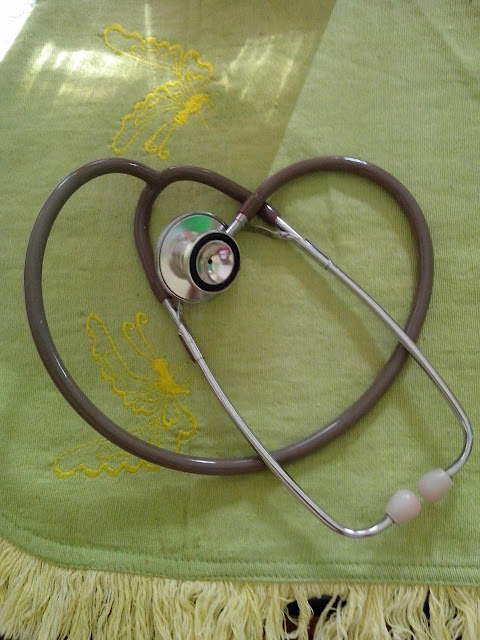
• How Stethoscope Works....

    A stethoscope is a medical device for listening to sounds inside the body. The initial stethoscope was invented in the early 19th century by French physician Ren� Laennec, but was actually trying to achieve a rather different end: doctor-patient distance....

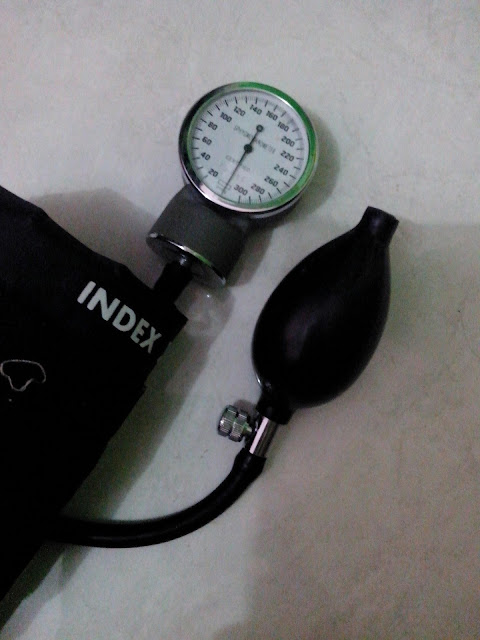
  • Care Plan For Decreased Cardiac Output...

    Nursing diagnosis for decreased cardiac output may be related to altered myocardial contractility, inotropic changes; alterations in rate, rhythm, electrical conduction; or structural changes, such as valvular defects and ventricular aneurysm. ...

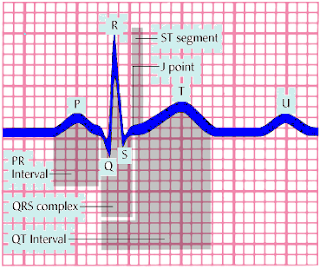
  • ECG Waveforms And Components

    The electrocardiogram (ECG) is a graphic recording ofelectric potentials generated by the heart.The signals are detected by means of metal electrodes attached to the extremities and chest wall and are then amplified and recorded by the electrocardiograph. ECG leads actually display the instantaneous differences in potential between these electrodes. ...

Showing posts with label Infant. Show all posts

Wednesday, July 8, 2015

Modified Glasgow Coma Scale For Infants And Children

Modified Glasgow Coma Scale for infants and children. Coma scoring system appropriate for pediatric patients.
Obtained from Marcoux (2005) [24]
Activity
Score
Infant/non-verbal child (<2 years)
Verbal child/adult (>2 years)
Eye Opening
 4
Spontaneous
Spontaneous
 3
To Speech
To verbal stimuli
 2
To Pain Only
To Pain Only
 1
No Response
No Response
Motor Response
 6
Normal/ spontaneous movement
Obeys commands
 5
Withdraws to touch
Localizes pain
 4
Withdraws to pain
Flexion withdrawal
 3
Abnormal flexion (decorticate)
Abnormal flexion
 2
Extension (decerebrate)
 1
No response
No response
2–5 years
> 5 years
Verbal Response
 5
Cries appropriately, coos
Appropriate words
Oriented
 4
Irritable crying
Inappropriate words
Confused
 3
Inappropriate screaming / crying
Screams
Inappropriate
 2
Grunts
Grunts
Incomprehensible
 1
No Response
No Response
No Response
Read More

Sunday, July 5, 2015

Developmental Screening Tools Commonly Used To Assess Child Development

Developmental screening tools commonly used to assess child development. Data from references: Behrman et al. (2004) [4] and Wong et al. (2000) [35]

Tool name
Revised Denver
developmental
screening test
(Denver II)
Prescreening
developmental questionnaire
R-PDQ)
Developmental
profile II
Draw a person
(DAP) test
Author
Frankenburg [13]
Frankenburg et al. [14]
Alpern et al. [1]
Goodenough [15]
Items scored
Gross motor
Fine motor
Language
Personal-social
Parent answered
prescreen of items
on Denver II
Physical
Self-help
Social
Academic
Communication
Score for body parts
Age range
Birth–6 years
Birth–6 years
Birth–7 years
5–17 years
Interview
Parent/child
Parent only
Parent/child
Child only
Testing time
30–40 minutes
15–20 min
20–40 min
As needed
Training/certified
Yes
Self-instruction
Self-instruction
Self-instruction
Pros/cons
Range of items
Identify child’s
strengths/weakness
Validity tested
Cultural bias
Teaching tool
Parent report
Can rescreen
If delays administer
Denver II
Range of items
Low rate of sensitivity
Nonverbal
Nonthreatening
Cultural unbias
Few items to score
Gives IQ score
Read More
Powered by Blogger.

Search This Blog