• How Stethoscope Works....

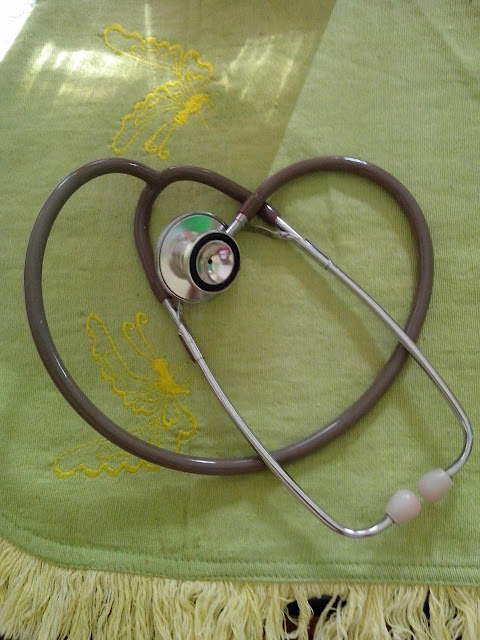
    A stethoscope is a medical device for listening to sounds inside the body. The initial stethoscope was invented in the early 19th century by French physician Ren� Laennec, but was actually trying to achieve a rather different end: doctor-patient distance....

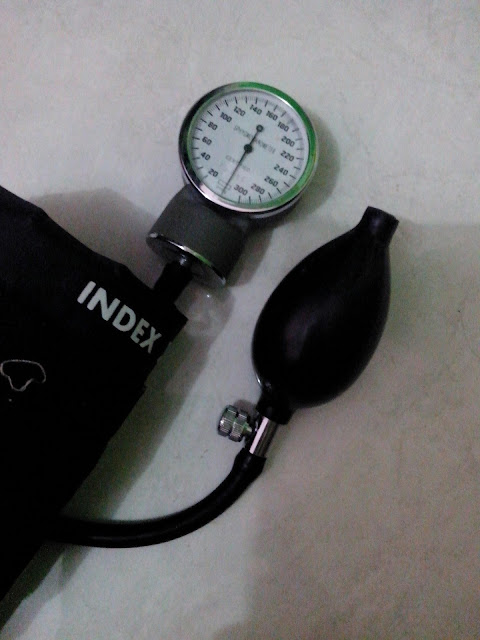
  • Care Plan For Decreased Cardiac Output...

    Nursing diagnosis for decreased cardiac output may be related to altered myocardial contractility, inotropic changes; alterations in rate, rhythm, electrical conduction; or structural changes, such as valvular defects and ventricular aneurysm. ...

  • ECG Waveforms And Components

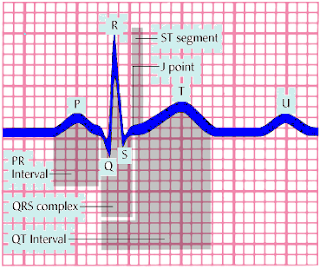
    The electrocardiogram (ECG) is a graphic recording ofelectric potentials generated by the heart.The signals are detected by means of metal electrodes attached to the extremities and chest wall and are then amplified and recorded by the electrocardiograph. ECG leads actually display the instantaneous differences in potential between these electrodes. ...

Showing posts with label care plan. Show all posts

Saturday, March 8, 2014

Nursing Diagnoses for Planning Care

Nurses and healthcare consumers agree that nursing care is a key factor in achieving positive outcomes and enhancing client satisfaction. Nursing care is instrumental in all phases of acute care as well as in the maintenance of general wellbeing (prevention of illness, rehabilitation, and maximization of health), or where a return to health is not possible, the relief of pain and discomfort and a peaceful death. To this end, the nursing profession has identified a problem-solving process that “combines the most desirable elements of the art of nursing with the most relevant elements of systems theory, using the scientific method”.
The original concept of nursing process was a three-step process of assessment, planning, and evaluation based on the scientific method of observing, measuring, gathering data, and analyzing the findings. After years of study, use, and refinement, the three-step process was expanded. The five steps—(1) assessment, (2) problem identification, (3) planning, (4) implementation (putting the plan into action), and (5) evaluation (assessing the effectiveness of the plan and changing the plan as indicated by current needs)—are central to nursing actions and the delivery of high-quality, individualized client care in any setting.
In 1991, the ANA Standards of Clinical Nursing Practice described the client care process and standards for professional performance, providing impetus and support for the use of nursing diagnosis in the practice setting. The work of NANDA International (formerly North American Nursing Diagnosis Association) has been ongoing for more than 25 years, beginning with efforts to identify client problems/needs for which nurses are accountable. NANDA continues to develop nursing diagnostic labels, which are now being complemented by the Iowa Intervention Project: Nursing Interventions Classification (NIC) and the Iowa Outcomes Project: Nursing Outcomes Classification (NOC). NIC directs our focus to the content and process of nursing care by identifying and standardizing the care activities nurses perform while NOC describes client outcomes that are responsive to nursing intervention and developing corresponding measurement scales.
Changes in the healthcare system continue to occur, requiring the profession of nursing to define itself in a way that will complement and facilitate the provision of appropriate, cost-effective evidenced-based care to all persons. Nurses need a common framework of communication and documentation so their contribution to healthcare is recognized as being essential and they are remunerated appropriately. At the very least, nursing requires a commonality of words describing practice so it can be captured and is visible in the healthcare databases.
The linkage of nursing diagnoses to specific nursing interventions and client outcomes has led to the development of a number of standardized nursing languages (Omaha System, Clinical Care Classification, Ozbolt Patient Care Data Set, Perioperative Minimum Data Set). The purpose of these languages is to help ensure continuity of appropriate highquality nursing care for the client regardless of setting. This is accomplished in part through enhanced communication, standardization of the process evaluating the care provided, and facilitation of documentation.
Read More

Friday, October 4, 2013

What Are Involve at Planning of Care?

Planning involves three subsets: setting priorities, writing expected outcomes, and establishing target dates. Planning sets the stage for writing nursing actions by establishing where we are going with our plan of care. Planning further assists in the final phase of evaluation by defining the standard against which we will measure progress.
Setting Priorities
With the sicker, quicker problem discussed earlier, you are going to find yourself in the situation of having identified many more problems than can possibly be resolved in a 1- to 3-day hospitalization (today’s average length of stay). In the long-term care facilities, such as home health, rehabilitation, and nursing homes, long-range problem solving is possible, but setting priorities of care is still necessary.
Several methods of assigning priorities are available. Some nurses assign priorities based on the life threat posed by a problem. For example, Ineffective Airway Clearance would pose more of a threat to life than the diagnosis Risk for Impaired Skin Integrity. Some nurses base their prioritization on Maslow’s Hierarchy of Needs. In this instance, physiologic needs would require attention before social needs. One way to establish priorities is to simply ask the patient which problem he or she would like to pay attention to first. Another way to establish priorities is to analyze the relationships between problems. For example, a patient has been admitted with a medical diagnosis of headaches and possible brain tumor. The patient exhibits the defining characteristics of both Pain and Anxiety. In this instance, we might want to implement nursing actions to reduce anxiety, knowing that if the anxiety is not reduced, pain control actions will not be successful. Once priorities have been established, you are ready to establish expected outcomes.
Expected Outcomes
Outcomes, goals, and objectives are terms that are frequently used interchangeably because all indicate the end point we will use to measure the effectiveness of our plan of care.
Several guidelines for writing clinically useful expected outcomes:
  1. Expected outcomes are clearly stated in terms of patient behavior or observable assessment factors.
  2. Expected outcomes are realistic, achievable, safe, and acceptable from the patient’s viewpoint.
  3. Expected outcomes are written in specific, concrete terms depicting patient action.
  4. Expected outcomes are directly observable by use of at least one of the five senses.
  5. Expected outcomes are patient centered rather than nurse centered.
Establishing Target Dates
Writing a target date at the end of the expected outcome statement facilitates the plan of care in several ways:
  1. Assists in “pacing” the care plan. Pacing helps keep the focus on the patient’s progress.
  2. Serves to motivate both patients and nurses toward accomplishing the expected outcome.
  3. Helps patient and nurse see accomplishments.
  4. Alerts nurse when to evaluate care plan.
Target dates can be realistically established by paying attention to the usual progress and prognosis connected with the patient’s medical and nursing diagnoses. Additional review of the data collected during the initial assessment helps indicate individual factors to be considered in establishing the date. For example, one of the previous expected outcomes was stated as “Accurately return-demonstrates self-administration of insulin by 9/11.”
The progress or prognosis according to the patient’s medical and nursing diagnosis will not be highly significant. The primary factor will be whether diabetes mellitus is a new diagnosis for the patient or is a recurring problem for a patient who has had diabetes mellitus for several years.
For the newly diagnosed patient, we would probably want our deadline day to be 5 to 7 days from the date of learning the diagnosis. For the recurring problem, we might establish the target date to be 2 to 3 days from the date of diagnosis. The difference is, of course, the patient’s knowledge base.
Now look at an example related to the progress issue. Mr. X is a 19-year-old college student who was admitted early this morning with a medical diagnosis of acute appendicitis. He has just returned from surgery following an appendectomy. One of the nursing diagnoses for Mr. X would, in all probability, be Pain. The expected outcome could be “Will have decrease in number of requests for analgesics by [date].” In reviewing the general progress of a young patient with this medical and nursing diagnosis, we know that generally analgesic requirements start decreasing within 48 to 72 hours. Therefore, we would want to establish our target date as 2 to 3 days following the day of surgery. This would result in the objective reading (assume date of surgery was 11/1): “Will have decrease in number of requests for analgesics by 11/3.”
To further emphasize the target date, it is suggested that the date be underlined, highlighted by using a different-colored pen, or circled to make it stand out. Pinpointing the date in such a manner emphasizes that evaluation of progress toward achievement of the expected outcome should be made on that date. In assigning the dates, be sure not to schedule all the diagnoses and expected outcomes for evaluation on the same date. Such scheduling would require a total revision of the plan of care, which could contribute to not keeping the plan of care current. Being able to revise single portions of the plan of care facilitates use and updating of the plan. Remember that the target date does not mean the expected outcome must be totally achieved by that time; instead, the target date signifies the evaluation date.
Once expected outcomes have been written, you are then ready to focus on the next phase—implementation. As previously indicated, the title supported by this book for this section is “Nursing Actions.”
Read More

Friday, September 6, 2013

Care Plan Or Planning Of Care?

Revisions of nursing standards created questions regarding the necessity of nursing care plans. Some have predicted the rapid demise of the care plan, according to Brider, but review of the revised nursing standards shows that the standards require not less but more detailed care planning documentation in the patient’s medical record.

Review of the new criteria indicates that the standards require documentation related to the nursing process. For example, the plan of care statement reads:

A plan, based on data gathering during patient assessment, that identifies the patient’s care needs, tests the strategy for providing services to meet those needs, documents treatment goals or objectives, outlines the criteria for terminating specified interventions, and documents the individual’s progress in meeting specified goals and objectives. The format of the “plan” in some organizations may be guided by patient-specific policies and procedures, protocols, practice guidelines, clinical paths, care maps, or a combination of these. The plan of care may include care, treatment, habilitation and rehabilitation.

Rather than eliminating care plans, the requirements call for a more specific as well as a more permanent documentation of the plan of care. This documentation must be in the medical record. The standard indicates that a separate care plan form is no longer necessary; however, the standard also still allows a separate care plan form. Various institutions are now testing flexible ways of documenting care planning. The care plan is not dead; rather, it is revised to more clearly reflect the important role of nursing in the patient’s care. No longer a separate, often discarded, and irrelevant page, the plan of care must be part of the permanent record. The flow sheets developed for this book offer guidelines for computerizing information regarding nursing care.

Faculty can use the revised standards to assist students in developing expertise beyond writing extensive nursing care plans. This additional expertise requires the new graduate to integrate all phases of the nursing process into the permanent record. Rather than eliminating the need for care planning and nursing diagnosis, the standards have reinforced the importance of nursing care and nursing diagnosis.

 
Read More

Care Plan For Decreased Cardiac Output

Nursing diagnosis for decreased cardiac output may be related to altered myocardial contractility, inotropic changes; alterations in rate, rhythm, electrical conduction; or structural changes, such as valvular defects and ventricular aneurysm.

It is possibly evidenced by increased heart rate (tachycardia), dysrhythmias, ECG changes; changes in BP (hypotension, hypertension); extra heart sounds (S3, S4); decreased urine output; diminished peripheral pulses; cool, ashen skin and diaphoresis; orthopnea, crackles, JVD, liver engorgement, edema; or chest pain

Desired outcomes for this nursing diagnosis are, client will have Cardiac Pump Effectiveness-NOC by evaluation criteria

  • Display vital signs within acceptable limits, dysrhythmias absent or controlled, and no symptoms of failure, for example, hemodynamic parameters within acceptable limits and urinary output adequate.
  • Report decreased episodes of dyspnea and angina.

Client also will have Cardiac Disease Self-Management-NOC by evaluation criteria Participate in activities that reduce cardiac workload.

Possible intervention : Hemodynamic Regulation-NIC by action such as

  • Auscultate apical pulse; assess heart rate, rhythm, and document dysrhythmia if telemetry available. Tachycardia is usually present, even at rest, to compensate for decreased ventricular contractility. Premature atrial contractions (PACs), paroxysmal atrial tachycardia (PAT), PVCs, multifocal atrial tachycardia (MAT), and AF are common dysrhythmias associated with HF, although others may also occur. Note: Intractable ventricular dysrhythmias unresponsive to medication suggest ventricular aneurysm.
  • Note the heart sounds. S1 and S2 may be weak because of diminished pumping action. Gallop rhythms are common (S3 and S4), produced as blood flows into noncompliant, distended chambers.
  • Palpate peripheral pulses. Decreased cardiac output may be reflected in diminished radial, popliteal, dorsalis pedis, and post-tibial pulses. Pulses may be fleeting or irregular to palpation, and pulsus alternans may be present.
  • Inspect skin for pallor and cyanosis. Pallor is indicative of diminished peripheral perfusion secondary to inadequate cardiac output, vasoconstriction, and anemia. Cyanosis may develop in refractory HF. Dependent
    areas are often blue or mottled as venous congestion increases.
  • Monitor urine output, noting decreasing output and dark or concentrated urine. Kidneys respond to reduced cardiac output by retaining water and sodium. Urine output is usually decreased during the day because of fluid shifts into tissues, but may be increased at night because fluid returns to circulation when client is recumbent.
  • etc.
 
 
Read More
Powered by Blogger.

Search This Blog