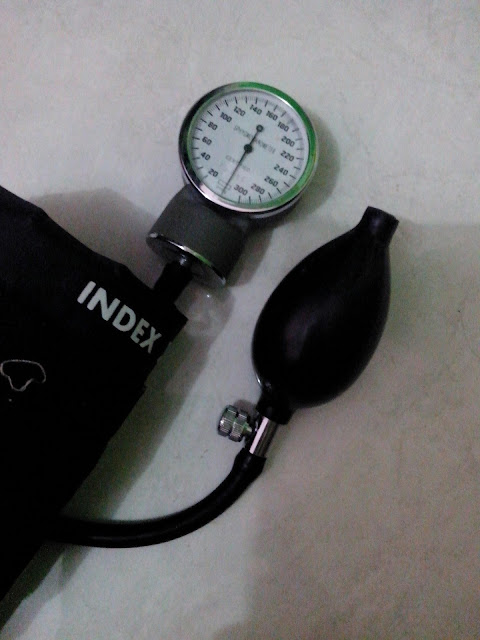
A stethoscope is a medical device for listening to sounds inside the body. The initial stethoscope was invented in the early 19th century by French physician Ren� Laennec, but was actually trying to achieve a rather different end: doctor-patient distance....
Showing posts with label Urinary Incontinence. Show all posts
Wednesday, July 16, 2014
STRENGTHENING PELVIC FLOOR MUSCLES
Posted by
Channel Maymoon
Labels:
exercises,
Geriatric,
Geriatric Care,
incontinence management,
Urinary Incontinence
at
3:28 PM
Stress incontinence, the most common kind of urinary incontinence
in women, usually results from weakening of the urethral sphincter. In men, it
may sometimes occur after a radical prostatectomy.
You can help male and female patients prevent or minimize stress
incontinence by teaching pelvic floor (Kegel) exercises to strengthen the
pubococcygeal muscles. Here's how.
Learning Kegel exercises
First, explain how to locate the muscles of the pelvic floor.
Instruct the patient to tense the muscles around the anus, as if to retain
stools.
To identify this area initially, teach the patient to tighten the
muscles of the pelvic floor to stop the flow of urine while urinating and then
to release the muscles to restart the flow. Once learned, these exercises can be
done anywhere. Although Kegel exercises shouldn't be done while urinating, they
can be done at any other time.
Establishing a regimen
Explain to the patient that contraction and relaxation exercises
are essential to muscle retraining. Suggest that the patient start out by
contracting the pelvic floor muscles for 5 seconds, relax for 5 seconds, and
then repeat the procedure as often as needed.
Typically, the patient starts with 10 contractions in the morning
and 10 at night, gradually increasing the relaxation and contraction time.
Advise the patient not to use stomach, leg, or buttock muscles.
Also discourage leg crossing or breath holding during these
exercises.
Friday, June 20, 2014
Correcting Urinary Incontinence With Bladder Retraining
Posted by
Channel Maymoon
Labels:
Bladder Retraining,
Geriatric,
Geriatric Care,
nursing procedures,
nursing skills,
techniques,
Urinary Incontinence
at
3:16 PM
The incontinent patient typically feels frustrated, embarrassed,
and hopeless. Fortunately, his problem can usually be corrected by bladder
retraining—a program that aims to establish a regular voiding pattern. Follow
these guidelines.
Assess elimination patterns
First, assess the patient's intake and voiding patterns and reason
for each accidental voiding (such as a coughing spell). Use an incontinence
monitoring record.
Establish a voiding schedule
Encourage the patient to void regularly, for example, every 2
hours. When he can stay dry for 2 hours, increase the interval by 30 minutes
every day until he achieves a 3- to 4-hour voiding schedule. Teach the patient
to practice relaxation techniques such as deep breathing, which help decrease
the sense of urgency.
Record results and remain positive
Keep a record of continence and incontinence for about 5 days to help reinforce the patient's efforts to remain continent.
Remember, both your own and your patient's positive attitudes are crucial to his
successful bladder retraining.
Take steps for success
Here are some additional tips to boost the patient's success:
-
Be sure to locate the patient's bed near a bathroom or portable toilet. Leave a light on at night. If the patient needs assistance getting out of bed or a chair, promptly answer the call for help.
-
Teach the patient measures to prevent urinary tract infections, such as adequate fluid intake (at least 2,000 ml/day unless contraindicated), drinking cranberry juice to help acidify urine, wearing cotton underpants, and bathing with nonirritating soaps. If the patient has urge incontinence, cranberry juice is contraindicated.
-
Encourage the patient to empty his bladder completely before and after meals and at bedtime.
-
Advise him to urinate whenever the urge arises and never to ignore it.
-
Instruct the patient to take prescribed diuretics upon rising in the morning.
-
Advise him to limit the use of sleeping aids, sedatives, and alcohol; they decrease the urge to urinate and can increase incontinence, especially at night.
-
If the patient is overweight, encourage weight loss.
-
Suggest exercises to strengthen pelvic muscles.
-
Instruct the patient to increase dietary fiber to decrease constipation and incontinence.
-
Monitor the patient for signs of anxiety and depression.
-
Reassure the patient that periodic incontinent episodes don't mean that the program has failed. Encourage persistence, tolerance, and a positive attitude.
Subscribe to:
Comments (Atom)
Powered by Blogger.