• How Stethoscope Works....

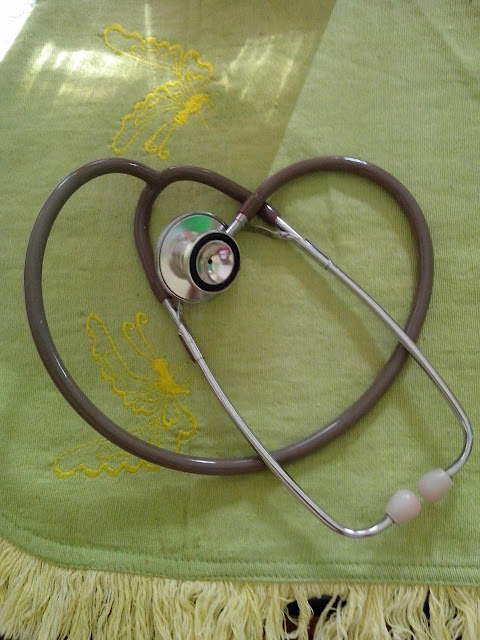
    A stethoscope is a medical device for listening to sounds inside the body. The initial stethoscope was invented in the early 19th century by French physician Ren� Laennec, but was actually trying to achieve a rather different end: doctor-patient distance....

  • Care Plan For Decreased Cardiac Output...

    Nursing diagnosis for decreased cardiac output may be related to altered myocardial contractility, inotropic changes; alterations in rate, rhythm, electrical conduction; or structural changes, such as valvular defects and ventricular aneurysm. ...

  • ECG Waveforms And Components

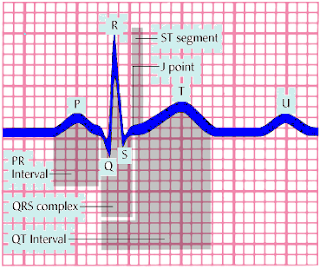
    The electrocardiogram (ECG) is a graphic recording ofelectric potentials generated by the heart.The signals are detected by means of metal electrodes attached to the extremities and chest wall and are then amplified and recorded by the electrocardiograph. ECG leads actually display the instantaneous differences in potential between these electrodes. ...

Showing posts with label techniques. Show all posts

Friday, June 20, 2014

Correcting Urinary Incontinence With Bladder Retraining

The incontinent patient typically feels frustrated, embarrassed, and hopeless. Fortunately, his problem can usually be corrected by bladder retraining—a program that aims to establish a regular voiding pattern. Follow these guidelines.
Assess elimination patterns
First, assess the patient's intake and voiding patterns and reason for each accidental voiding (such as a coughing spell). Use an incontinence monitoring record.
Establish a voiding schedule
Encourage the patient to void regularly, for example, every 2 hours. When he can stay dry for 2 hours, increase the interval by 30 minutes every day until he achieves a 3- to 4-hour voiding schedule. Teach the patient to practice relaxation techniques such as deep breathing, which help decrease the sense of urgency.
Record results and remain positive
Keep a record of continence and incontinence for about 5 days to help reinforce the patient's efforts to remain continent. Remember, both your own and your patient's positive attitudes are crucial to his successful bladder retraining.
Take steps for success
Here are some additional tips to boost the patient's success:
  • Be sure to locate the patient's bed near a bathroom or portable toilet. Leave a light on at night. If the patient needs assistance getting out of bed or a chair, promptly answer the call for help.
  • Teach the patient measures to prevent urinary tract infections, such as adequate fluid intake (at least 2,000 ml/day unless contraindicated), drinking cranberry juice to help acidify urine, wearing cotton underpants, and bathing with nonirritating soaps. If the patient has urge incontinence, cranberry juice is contraindicated.
  • Encourage the patient to empty his bladder completely before and after meals and at bedtime.
  • Advise him to urinate whenever the urge arises and never to ignore it.
  • Instruct the patient to take prescribed diuretics upon rising in the morning.
  • Advise him to limit the use of sleeping aids, sedatives, and alcohol; they decrease the urge to urinate and can increase incontinence, especially at night.
  • If the patient is overweight, encourage weight loss.
  • Suggest exercises to strengthen pelvic muscles.
  • Instruct the patient to increase dietary fiber to decrease constipation and incontinence.
  • Monitor the patient for signs of anxiety and depression.
  • Reassure the patient that periodic incontinent episodes don't mean that the program has failed. Encourage persistence, tolerance, and a positive attitude.
Read More

Monday, June 9, 2014

Supplies and Use of Supplies for Phlebotomy Venipuncture Procedure

By establishing a procedure for the correct collection of blood by venipuncture many pre-
analytical errors and patient management complications can be avoided. Patient safety is the ultimate goal above all other considerations. Cost, efficiency, etc are secondary to ensuring that in no way will the patient be harmed by the phlebotomy procedure. This includes all aspects of the procedure including ordering, drawing, labeling, handling and transporting the specimen. The quality of the patient results is directly dependent upon the quality of the specimen. By providing the highest standard of safety and quality of care customer service satisfaction can be achieved.
Supplies and use of supplies –(Refer to Standard Phlebotomy Tray policy)
1. Blood Collecting Trays
- Blood collecting trays should be lightweight and easy to handle with enough space and compartments for the various supplies.
2. Gloves
- Disposable latex, vinyl, polyethylene, or nitrile gloves provide barrier protection and must be worn for all venipuncture procedures to comply with OSHA regulations.
Latex free gloves must be worn for all patients with a hypersensitivity to latex proteins.
3. Hubs
a. All Vacutainer holders are to be SINGLE USE.
OSHA states “Blood tube holders, with needle attached, must be immediately discarded into an accessible sharps container after safety feature has been activated”. The re-use of vacutainer blood tube holders is strictly prohibited by OSHA and BVHS. (According to OSHA, “removing contaminated needles and re-using blood tube holders can expose workers to multiple hazards.”
b. Specimen transfer hubs are also available and, for our safety, are to be used before attempting to use a transfer needle. To use this device, simply attach it to the syringe and place the/each necessary vacutainer tube in the in the vacutainer holder until the appropriate amount of specimen is transferred.
4. Needles
- A large gauge (G) number indicates a small needle, while a small gauge number indicates alarge needle.
Needles must always be sterile and should never be recapped.
In order to prevent potential worker exposure, the needle safety feature should be activated immediately after specimen collection and discarded without disassembly into a sharps container. Needles are single use only.
a. BD Hypodermic needles
b. Butterfly “Push Button”
5. Sterile Syringes
-Sterile syringes must remain sterile. If removed from their container and not used immediately they are no longer considered sterile and are not to be used.
6. Blood Collection Tubes
- Venous blood collection tubes are manufactured to withdraw a predetermined volume of blood.
7. Tourniquets
-Tourniquets must be discarded immediately when contamination with blood or body fluids is obvious or suspected. Before drawing any in-patients, be sure to look around the room,
typically next to the sharps container, for a tourniquet that is specific for that patient. Out-patient draws and off-site tourniquets are replaced daily, or upon any sign of obvious or suspectedcontamination.
8. Antiseptics
- 70% isopropyl, PVP iodine prep pads, or 2% Iodine Tincture.
9. Gauze Pads
-Small, gauze pads should be available. Cotton balls may also be used.
10. Puncture-Resistant Disposable Container
-An approved puncture-resistant disposable container that is compliant with national or local regulations must be available for the disposal of the contaminated needle assembly. Such containers typically have a color regulated by each country, and a biohazard symbol.
11. Ice
-Ice or refrigerant should be available for specimens that require immediate chilling.
12. Bandages/Tape
- Adhesive bandages, preferably hypoallergenic, should be available, as well as gauze wraps for sensitive or fragile skin.
13. Warming Devices
- Warming devices may be used to dilate blood vessels and increase flow. When using commercial warmers follow the manufacturer’s recommendation. Warming devices should not exceed 42º C.
14. Specimen Collection Manual/Reference Lab Manual
- A test manual listing the tube(s) and volume requirements for various tests, specimen handling instructions, and precautions is available on all computers.
Read More

Thursday, October 24, 2013

Educational and Competency Requirements for The Administration and Supply of Medications by Nurses in Rural and Remote Areas

Following are the areas of responsibility that rural and remote nurses must accept if medication management is to become part of their legal practice.

Knowledge of Medicines:
Nurses should have contemporary knowledge of pharmacology for safe and appropriate nursing practice in rural and remote communities. The nurse also must have sound knowledge and skills relating to medications in their facility’s approved medication list. Another requirement is that the nurse should have reasonable access to and familiarity with the resources available for collaboration, consultation/reference in regards to the use of medications.
Relevant and appropriate clinical educational preparation and competency assessment will support best practice in the administration and supply of medication by registered nurses in rural and remote settings.

Knowledge of Law:
The nurse must have knowledge of the statutory and common laws, which govern medication use by registered nurses, for practice.
Civil laws, statutory acts and regulations establish the standard of the delivery of appropriate and safe care to patients. Knowledge of the legislative requirements is essential to ensure registered nurses’ practise within the law.

Assessment of Competency:
The practice of initiating, administering and supplying medications in rural or remote areas should be confined to registered nurses who have demonstrated competency in these areas.
An assessment of competency should include:
  • Knowledge and skills for patient assessment and diagnosis
  • An examination of medication knowledge.
  • A test of competency in medication calculations.
  • Knowledge of the medication schedules as they impact on clinical practice.
  • A clinical/practical assessment of compliance with protocols in the practice context.
Knowledge of clinical assessment and medication use is essential to enable the nurse to make an informed decision about the initiation of safe and appropriate treatment. Competency in medication/IV calculations may reduce the risk of dose/rate errors. It is the nurse’s responsibility to have knowledge of current schedules to practise in accordance with the relevant legislation. Current literature indicates that a significant number of nursing students have serious numeracy skill deficits and that even if these skills are mastered, they can deteriorate if not continually exercised.

Read More

Saturday, August 24, 2013

Focus Charting System As Nursing Documentation Tool

The Focus Charting system has been designed by nurses for documentation of frequent/repetitive care and to encourage viewing the client from a positive rather than a negative (problem only) perspective. Charting is focused on client and nursing concerns, with the focal point of client status and the associated nursing care. A Focus is usually a client problem/concern or nursing diagnosis but is not a medical diagnosis or a nursing task/treatment (e.g., wound care, indwelling catheter insertion, tube feeding).
We track what is happening to the client at any given moment by recording of assessment, interventions, and evaluation using Data, Action, and Response (DAR) categories. Thus, the four components of this charting system are:
  1. Focus: Nursing diagnosis, client problem/concern, signs/ symptoms of potential importance (e.g., fever, dysrhythmia, edema), a significant event or change in status or specific standards of care/agency policy.
  2. Data: Subjective/objective information describing and/or supporting the Focus.
  3. Action: Immediate/future nursing actions based on assessment and consistent with/complementary to the goals and nursing action recorded in the client plan of care.
  4. Response: Describes the effects of interventions and whether the goal was met.

You can find charting examples that based on the data within the client situation by using google search.
Read More
Powered by Blogger.

Search This Blog