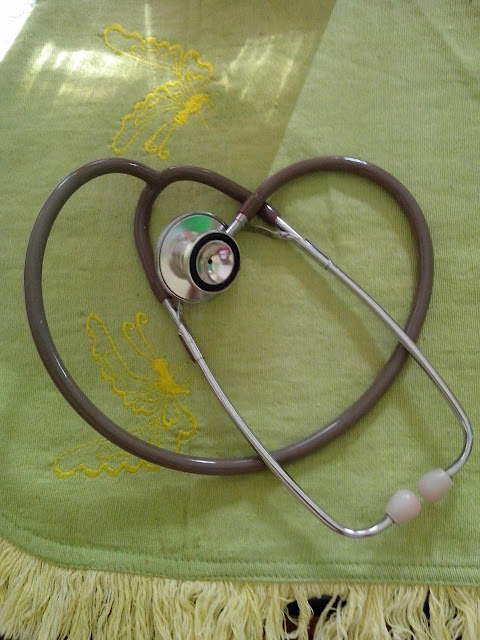
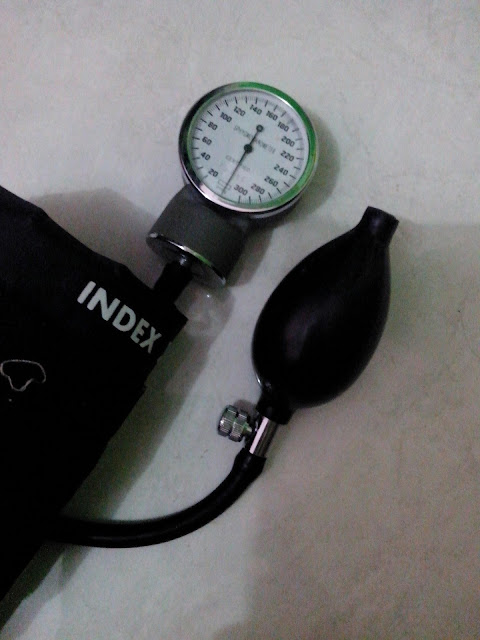
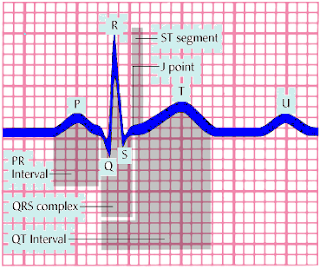
A stethoscope is a medical device for listening to sounds inside the body. The initial stethoscope was invented in the early 19th century by French physician Ren� Laennec, but was actually trying to achieve a rather different end: doctor-patient distance....
Friday, June 20, 2014
Correcting Urinary Incontinence With Bladder Retraining
-
Be sure to locate the patient's bed near a bathroom or portable toilet. Leave a light on at night. If the patient needs assistance getting out of bed or a chair, promptly answer the call for help.
-
Teach the patient measures to prevent urinary tract infections, such as adequate fluid intake (at least 2,000 ml/day unless contraindicated), drinking cranberry juice to help acidify urine, wearing cotton underpants, and bathing with nonirritating soaps. If the patient has urge incontinence, cranberry juice is contraindicated.
-
Encourage the patient to empty his bladder completely before and after meals and at bedtime.
-
Advise him to urinate whenever the urge arises and never to ignore it.
-
Instruct the patient to take prescribed diuretics upon rising in the morning.
-
Advise him to limit the use of sleeping aids, sedatives, and alcohol; they decrease the urge to urinate and can increase incontinence, especially at night.
-
If the patient is overweight, encourage weight loss.
-
Suggest exercises to strengthen pelvic muscles.
-
Instruct the patient to increase dietary fiber to decrease constipation and incontinence.
-
Monitor the patient for signs of anxiety and depression.
-
Reassure the patient that periodic incontinent episodes don't mean that the program has failed. Encourage persistence, tolerance, and a positive attitude.
Monday, June 9, 2014
Supplies and Use of Supplies for Phlebotomy Venipuncture Procedure
Wednesday, November 27, 2013
Biologic and Genetic Principles on Nursing
The impact of genetics on nursing is significant. The American Nurses Association (ANA) officially recognized genetics as a nursing specialty. This effort was spearheaded by the International Society of Nurses in Genetics (ISONG), which also initiated credentialing for the Advanced Practice Nurse in Genetics and the Genetics Clinical Nurse. ANA and ISONG have collaborated in the establishment of a scope and standards of practice for nurses in genetics practice. Essential Nursing Competencies and Curricula Guidelines for Genetics and Genomics were finalized in 2006. They reflect the minimal genetic and genomic competencies for every nurse regardless of academic preparation, practice setting, role, or specialty.
- Cytoplasm—contains functional structures important to cellular functioning, including mitochondria, which contain extranuclear deoxyribonucleic acid (DNA) important to mitochondrial functioning.
- Nucleus—contains 46 chromosomes in each somatic (body) cell, or 23 chromosomes in each germ cell (egg or sperm).
- Human DNA is a double-stranded helical structure comprised of four different bases, the sequence of which codes for the assembly of amino acids to make a protein—for example, an enzyme. These proteins are important for the following reasons:
- For body characteristics such as eye color.
- For biochemical processes such as the gene for the enzyme that digests phenylalanine.
- For body structure such as a collagen gene important to bone formation.
- For cellular functioning such as genes associated with the cell cycle.
-
- The four DNA bases are adenine, guanine, cytosine, and thymine-A, G, C, and T.
- A change, or mutation, in the coding sequence, such as a duplicated or deleted region, or even a change in only one base, can alter the production or functioning of the gene or gene product, thus affecting cellular processes, growth, and development.
- DNA analysis can be done on almost any body tissue (blood, muscle, skin) using molecular techniques (not visible under a microscope) for mutation analysis of a specific gene with a known sequence or for DNA linkage of genetic markers associated with a particular gene.
Friday, September 6, 2013
Essential Skills For Assessment In Nursing Process Steps
Assessment requires the use of the skills needed for interviewing, conducting a physical examination, and observing patients. As with the nursing process itself, these skills are not used one at a time. While you are interviewing the patient, you are also observing and determining physical areas that require a detailed physical assessment. While completing a physical assessment, you are asking questions (interviewing) and observing the patient’s physical appearance as well as the patient’s response to the physical examination.
Interviewing generally starts with gathering data for the nursing history. In this interview, you ask for general demographic information such as name, address, date of last hospitalization, age, allergies, current medications, and the reason the patient was admitted. Depending on the agency’s admission form, you may then progress to other specific questions or a physical assessment.
The physical assessment calls for four skills: inspection, palpation, percussion, and auscultation. Inspection means careful and systematic observation throughout the physical examination, such as observation for and recording of any skin lesions. Palpation is assessment by feeling and touching the patient. Assessing the differences in temperature between a patient’s upper and lower arm would be an example of palpation. Another common example of palpation is breast self-examination. Percussion involves touching, tapping, and listening. Percussion allows determination of the size, density, locations, and boundaries of the organs. Percussion is usually performed by placing the index or middle finger of one hand firmly on the skin and striking with the middle finger of the other hand. The resultant sound is dull if the body is solid under the fingers (such as at the location of the liver) and hollow if there is a body cavity under the finger (such as at the location of the abdominal cavity). Auscultation involves listening with a stethoscope and is used to help assess respiratory, circulatory, and gastrointestinal status.
The physical assessment may be performed using a head-to-toe approach, a body system approach, or a functional health pattern approach. In the head-to-toe approach, you begin with the patient’s general appearance and vital signs. You then progress, as the name indicates, from the head to the extremities.
The body system approach to physical assessment focuses on the major body systems. As the nurse is conducting the nursing history interview, she or he will get a firm idea of which body systems need detailed examination. An example is a cardiovascular examination, where the apical and radial pulses, blood pressure (BP), point of maximum intensity (PMI), heart sounds, and peripheral pulses are examined.
The functional health pattern approach is based on Gordon’s Functional Health Patterns typology and allows the collection of all types of data according to each pattern. This is the approach used by this book and leads to three levels of assessment. First is the overall admission assessment, where each pattern is assessed through the collection of objective and subjective data. This assessment indicates patterns that need further attention, which requires implementation of the second level of pattern assessment. The second level of pattern assessment indicates which nursing diagnoses within the pattern might be pertinent to this patient, which leads to the third level of assessment, the defining characteristics for each individual nursing diagnosis. Having a three-tiered assessment might seem complicated, but each assessment is so closely related that completion of the assessment is easy. A primary advantage in using this type of assessment is the validation it gives to the nurse that the resulting nursing diagnosis is the most correct diagnosis. Another benefit to using this type of assessment is that grouping of data is already accomplished and does not have to be a separate step.